Why Most Companies Don't Really Know What They're Spending Until It's Too Late
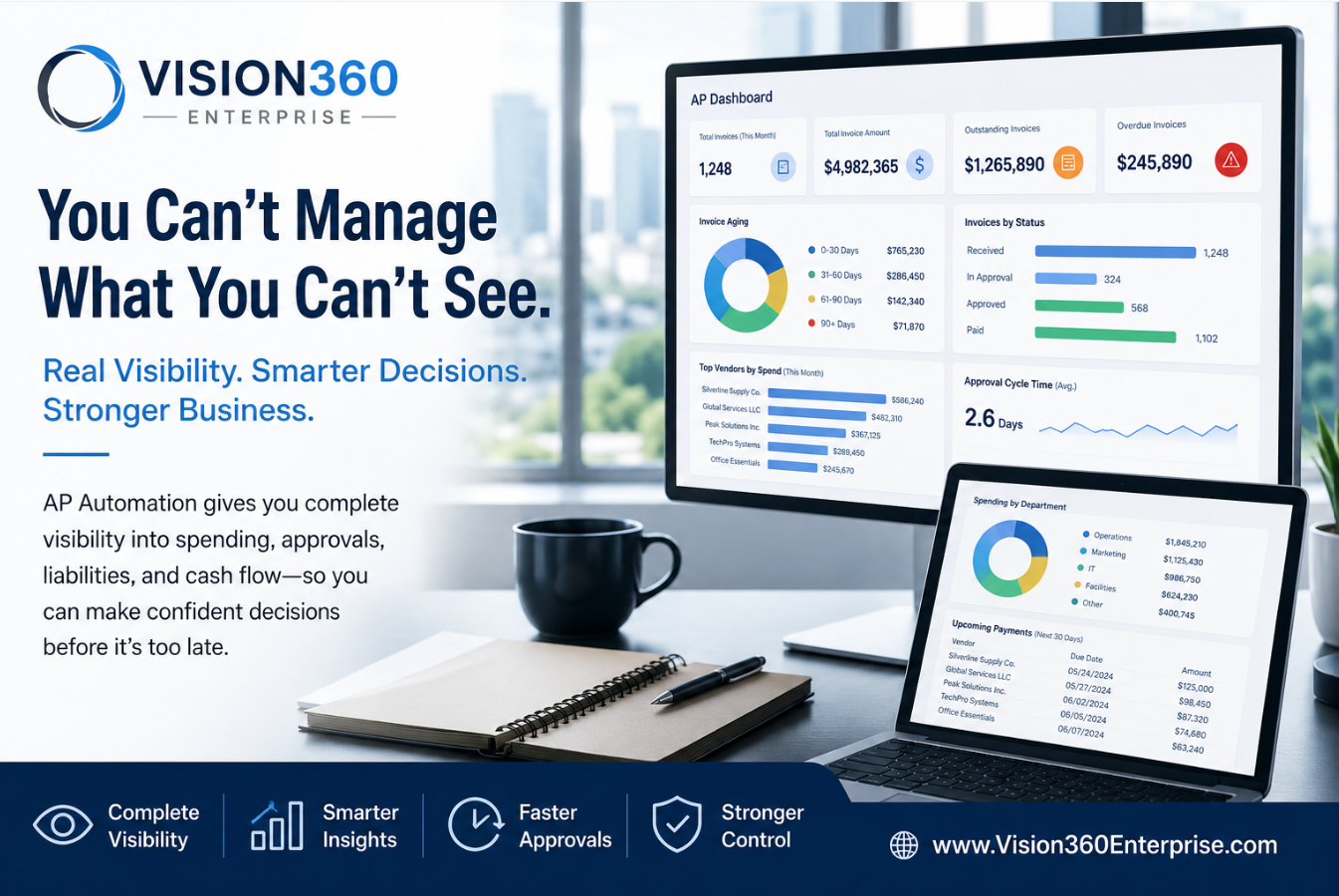
For all the technology available today, it's surprising how many organizations still operate with limited visibility into their actual spending.
Ask a CFO how much cash will leave the business over the next 30 days, and they can usually provide an estimate. Ask an AP Manager which invoices are sitting in approval queues, which vendors have outstanding balances, which departments are causing bottlenecks, and which invoices could qualify for early payment discounts, and the answer often requires multiple spreadsheets, emails, phone calls, and educated guesses.
The problem isn't a lack of data.
The problem is that the data is trapped.
The Hidden Cost of AP Blind Spots
Most organizations think of Accounts Payable as a back-office function focused on processing invoices and paying vendors.
In reality, Accounts Payable controls one of the largest streams of financial information flowing through the business.
Every invoice tells a story:
- What the company is buying
- Who it's buying from
- Which department initiated the purchase
- Whether spending aligns with budgets
- How quickly approvals are occurring
- Where potential cash flow obligations exist
Unfortunately, when invoices arrive through emails, paper documents, PDFs, and multiple locations, that information becomes fragmented.
By the time management receives reports, the opportunity to make proactive decisions may already be gone.
The Difference Between Processing Invoices and Managing Information
Traditional AP processes focus on one goal: getting invoices entered into the ERP system.
Modern AP Automation focuses on something much more valuable: transforming invoices into actionable business intelligence.
When invoices are automatically captured, validated, routed, and tracked from the moment they arrive, finance teams gain immediate visibility into spending activity across the organization.
Instead of asking:
"Has that invoice been entered yet?"
Organizations can ask:
"Why is spending in this category increasing?"
"Which vendors are consistently billing above contracted rates?"
"Where are approval delays occurring?"
"What liabilities are coming due next month?"
Those are business questions, not accounting questions.
And they are the questions leadership teams actually care about.
The Email Inbox Problem Nobody Talks About
Many AP departments still manage invoices through a shared email inbox.
At first, it seems simple.
Invoices arrive.
Someone opens the email.
Someone saves the attachment.
Someone enters the invoice.
Someone routes it for approval.
Someone follows up.
Someone pays it.
The process works—until it doesn't.
Invoices get buried.
Approvals get delayed.
Duplicate invoices slip through.
Employees spend hours searching for documents and email chains.
Meanwhile, management has little visibility into what is happening behind the scenes.
The AP inbox becomes a black hole where information enters but visibility disappears.
Visibility Creates Better Decisions
Organizations that automate Accounts Payable often discover an unexpected benefit.
The biggest improvement isn't faster invoice entry.
It's better decision-making.
With real-time dashboards and reporting, leadership can see:
- Outstanding liabilities
- Invoice aging trends
- Vendor activity
- Approval bottlenecks
- Department spending patterns
- Payment timing opportunities
Instead of reacting to problems after month-end close, they can identify issues while they are developing.
That level of visibility allows finance teams to become strategic advisors rather than transaction processors.
AP Automation Is About More Than Efficiency
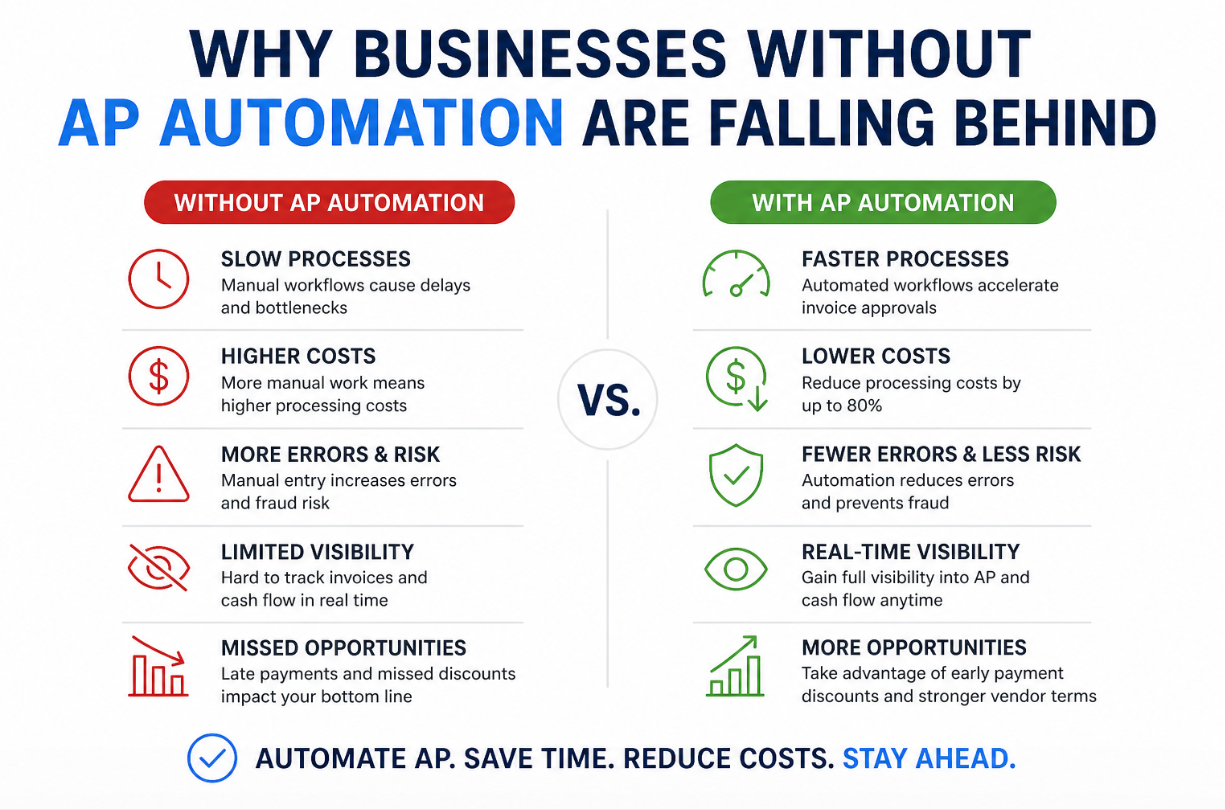
Yes, AP Automation reduces manual data entry.
Yes, it accelerates invoice approvals.
Yes, it helps prevent duplicate payments.
But those benefits only scratch the surface.
The real value comes from turning Accounts Payable into a source of financial intelligence.
Every invoice contains information.
The question is whether your organization is simply processing that information—or actually using it.
The Future of Accounts Payable
As organizations continue investing in AI, analytics, and digital transformation, visibility will become increasingly important.
Companies that still rely on manual AP processes will find themselves making decisions based on incomplete information.
Organizations that embrace AP Automation will gain something far more valuable than efficiency.
They will gain clarity.
And in today's business environment, clarity may be the most important competitive advantage of all.
About Vision360 Enterprise
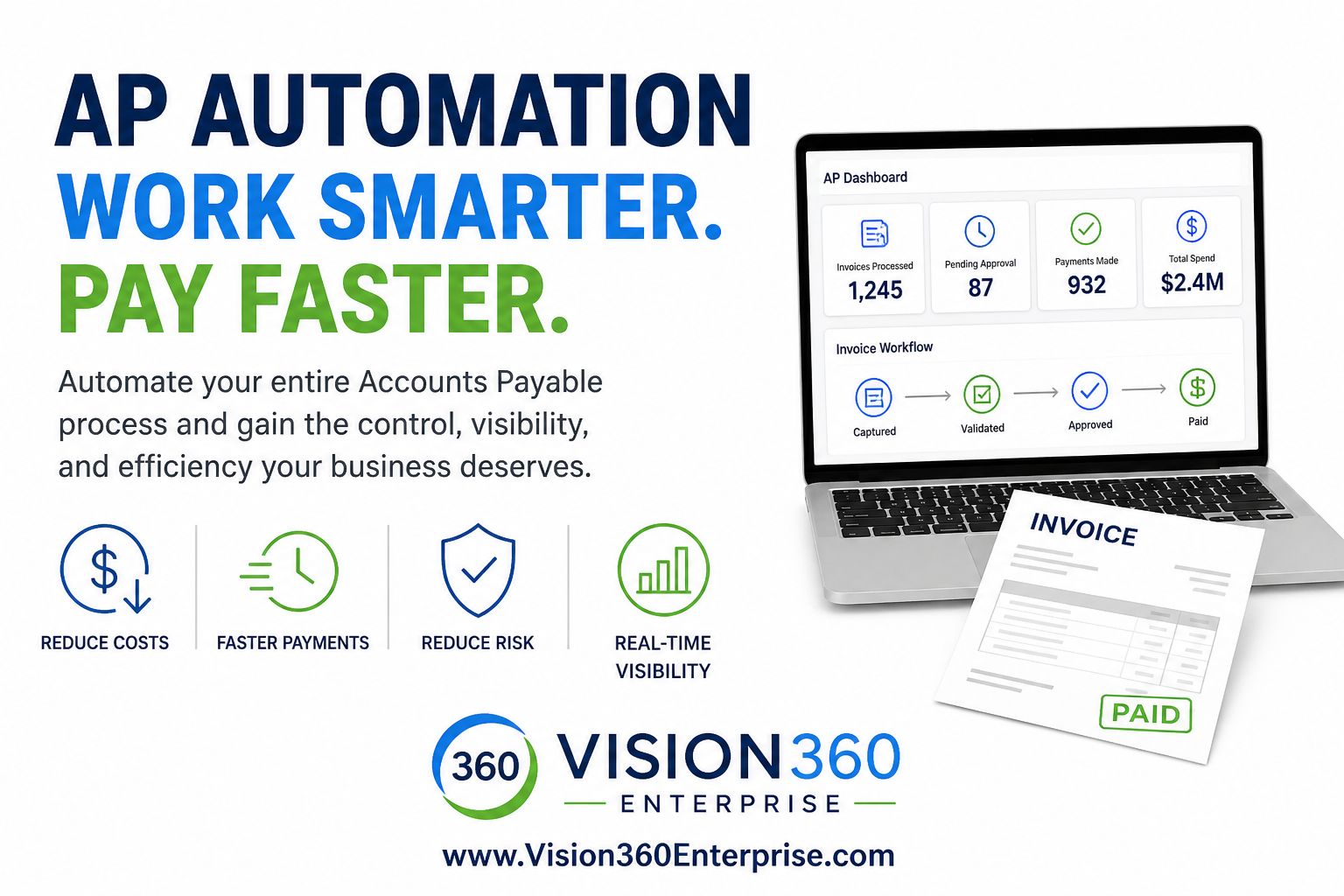
Vision360 Enterprise transforms invoice processing into a fully automated workflow that captures, validates, routes, approves, and archives invoices while providing complete visibility into the entire Accounts Payable process. By combining AI-powered data capture with real-time workflow management and ERP integration, organizations gain the financial insight needed to make faster and better business decisions.