From Manual AP Processing to AP Automation: What Does it Mean to Finance Teams
Introduction
The move from manual Accounts Payable processing to AP automation is much more than a technology upgrade. It represents a fundamental shift in how finance organizations operate, manage risk, optimize cash flow, and support growth. What was once viewed as a back-office processing function is increasingly becoming a strategic part of finance operations.
For organizations still relying on manual invoice handling, approval routing, paper-based processes, and labor-intensive payment workflows, automation offers an opportunity to transform AP from a reactive administrative function into a more intelligent, scalable, and value-driven operation.
The Limits of Manual AP Processing
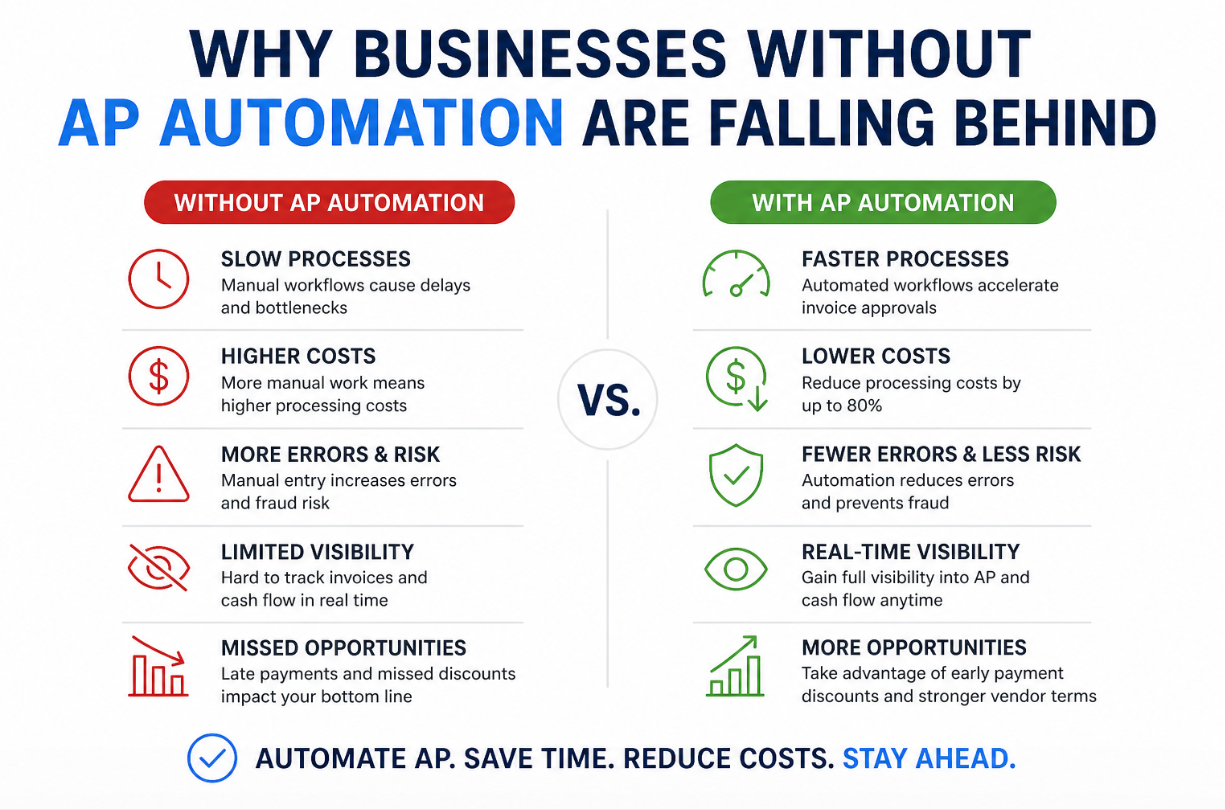
Traditional AP processes often depend on manual data entry, disconnected approval workflows, paper invoices, and significant human intervention. While these processes may appear manageable, they often create hidden costs through inefficiency, errors, delayed approvals, duplicate payments, compliance risks, and missed discount opportunities.
As invoice volumes grow, manual processes typically scale by adding headcount rather than improving efficiency. Over time, this creates operational strain, rising costs, and reduced agility.
What AP Automation Changes
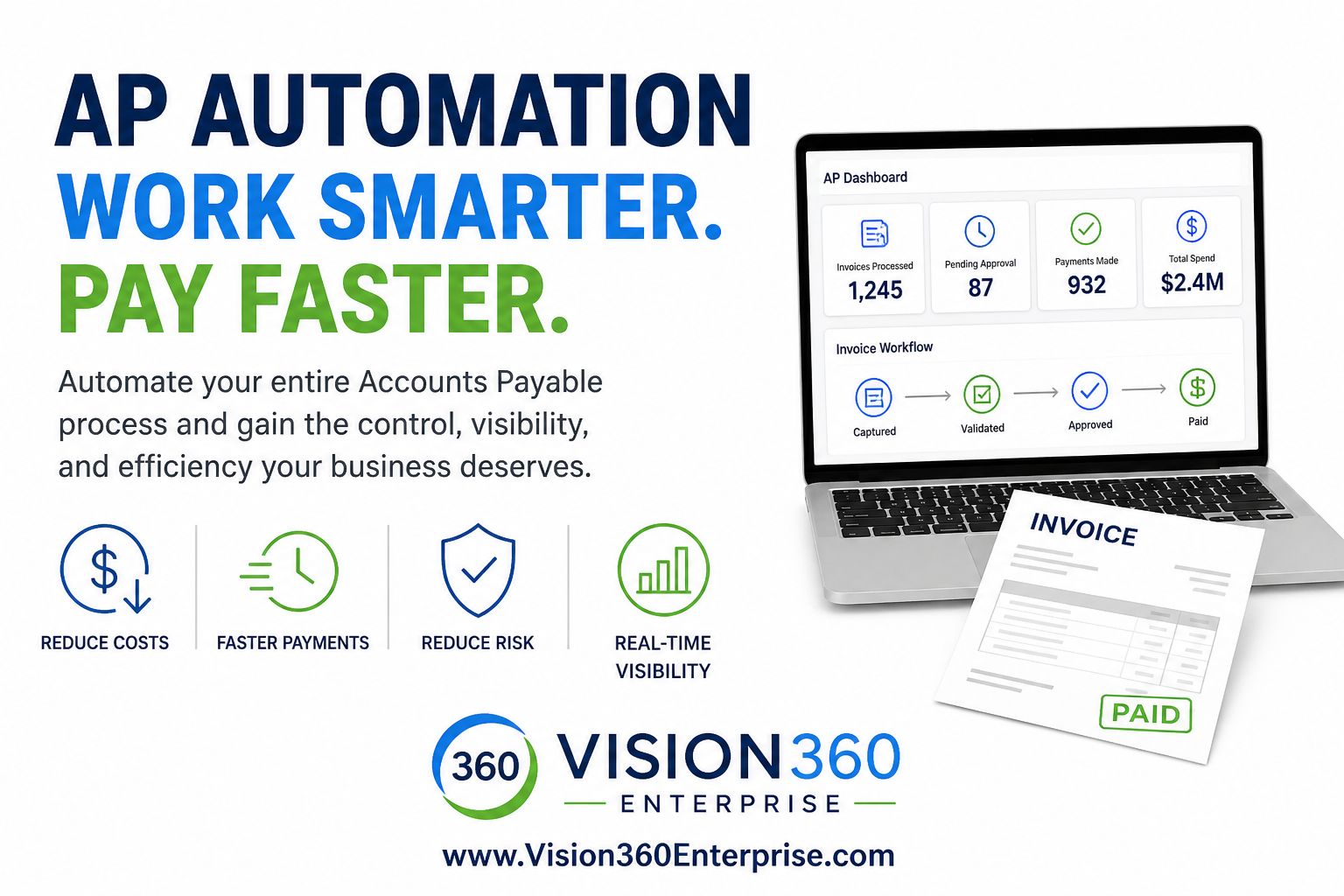
AP automation replaces repetitive manual tasks with digital workflows that streamline invoice capture, automate approvals, improve matching, and enhance payment execution. More importantly, it introduces visibility and control.
Instead of AP teams spending their time chasing invoices and resolving routine bottlenecks, automation allows them to focus on exceptions, controls, supplier relationships, and process improvement.
That changes the role of Accounts Payable significantly. It moves AP from processing transactions to managing workflows.
A Shift From Cost Center to Strategic Function
One of the biggest changes automation creates is strategic impact.
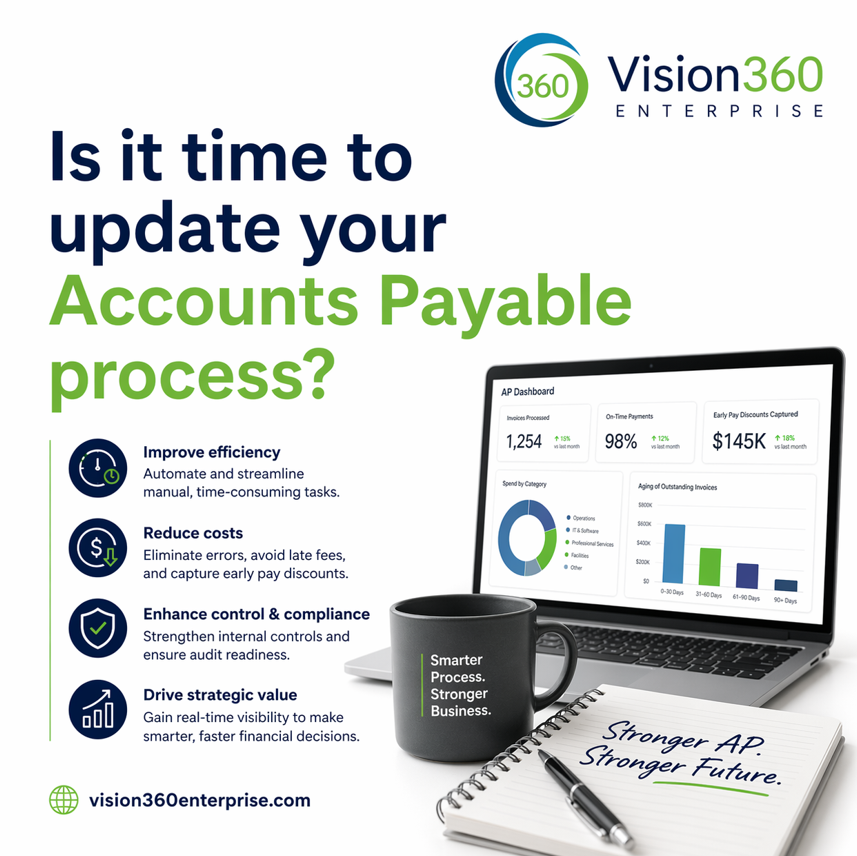
With automation, organizations can improve invoice cycle times, reduce processing costs, strengthen compliance, and optimize payment timing. Finance leaders gain better access to data, improved control over liabilities, and stronger support for working capital strategies.
This is why AP automation is increasingly tied not only to efficiency goals, but to broader finance transformation initiatives.
Scalability and Growth Support
Manual AP often struggles to support growth without adding resources.
Automation changes that model. Organizations can often handle increasing invoice volumes without proportional staffing increases because workflows scale through technology rather than labor. For growing companies, shared services organizations, and multi-entity businesses, this can be a major advantage.
Elevating the AP Team
A common misconception is that automation reduces the importance of AP professionals.
In reality, it often elevates the function.
As transactional work declines, AP teams can focus more on analytics, controls, exception management, and supplier collaboration. Roles become less clerical and more strategic.
That evolution is often one of automation’s greatest benefits.
Why Automation Is Becoming Essential
Today’s finance environment demands speed, visibility, control, and agility. Manual processes often struggle to deliver all four.
Automation helps organizations respond to those demands while reducing risk and improving performance.
Increasingly, it is not simply a question of whether AP should be automated, but how long organizations can afford to remain manual.
Conclusion
Moving from manual AP processing to automation means more than improving efficiency.
It means transforming how Accounts Payable contributes to the business.
It means moving from labor-intensive transaction processing toward intelligent financial operations.
And for many organizations, it is a critical step in modernizing finance for the future.