How Fraudsters Are Using AI to Cheat AP Departments
and Stealing From Your Organization.

Fraudsters are using AI to make traditional accounts payable scams far more convincing, scalable, and difficult to detect. While the underlying fraud techniques haven't changed dramatically, AI has made them faster, cheaper, and more believable.
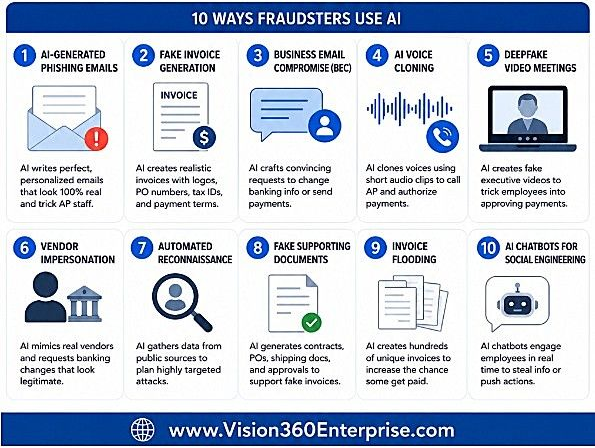


How Fradusters are using AI to Cheat AP Departments


Here are the most common ways AI is being used against AP departments:


1. AI-Generated Phishing Emails


This is currently the biggest threat.


AI can write emails that:

  • Perfectly match a CEO's writing style
  • Contain no spelling or grammar mistakes
  • Reference real vendors, invoices, or projects
  • Include personalized details gathered from LinkedIn, company websites, and social media


Example:

"Hi Sarah,
We're finalizing month-end. Please process the attached invoice from ABC Medical Supplies today so we can avoid late fees.
Thanks,
John"

Years ago, these emails often had obvious mistakes. Today they can be nearly indistinguishable from legitimate business communications.


2. Fake Invoice Generation


Generative AI can create invoices that look remarkably authentic.


Fraudsters can generate:

  • Realistic company logos
  • Professional invoice layouts
  • Purchase order numbers
  • Tax IDs
  • Payment terms
  • Matching remittance information


Some even use AI to create invoices that resemble previous invoices from the same vendor.


3. Business Email Compromise (BEC)


AI makes BEC attacks far more convincing.


Instead of sending a generic message like:

"Please change our banking information."

Fraudsters now create highly personalized requests that:

  • Mention recent purchases
  • Reference actual employees
  • Mimic vendor communication styles
  • Include realistic signatures and formatting


The goal is to trick AP into changing vendor banking information.


4. AI Voice Cloning


This is becoming increasingly common.


Using only a short audio sample from:

  • YouTube
  • Podcasts
  • Webinars
  • Earnings calls
  • LinkedIn videos


Attackers can clone someone's voice and call the AP department.


Example:

"Hi Lisa, it's Mark. I'm boarding a flight. We need this wire sent today. I'll explain later."

The voice can sound remarkably authentic.


5. Deepfake Video Meetings


Some organizations have reported cases where attackers used AI-generated video to impersonate executives during video calls, convincing employees to authorize payments or disclose sensitive information. While these attacks are less common than email-based scams, they can be highly persuasive when successful.


6. Vendor Impersonation


AI helps fraudsters impersonate legitimate vendors by:

  • Matching writing style
  • Using the correct terminology
  • Knowing invoice history
  • Referencing previous orders


An email may say:

"We've updated our ACH information due to our bank merger."

Everything appears legitimate except the new bank account.


7. Automated Reconnaissance


Before attacking, AI can rapidly collect information from:

  • LinkedIn
  • Company websites
  • Press releases
  • Job postings
  • Social media
  • Public procurement records


It builds profiles showing:

  • Who approves invoices
  • Finance leadership
  • ERP systems in use (such as MEDITECH, Oracle, SAP, etc.)
  • Vendor relationships
  • Organizational structure


This allows attacks to be tailored to a specific organization.


8. Fake Supporting Documents


AI can generate convincing supporting materials, including:

  • Contracts
  • Purchase orders
  • Shipping documents
  • Bills of lading
  • Delivery confirmations
  • Emails that appear to show approval chains


These documents make fraudulent invoices seem well supported.


9. Invoice Flooding


Rather than submitting one fake invoice, attackers can use AI to generate hundreds or thousands of unique invoices with:

  • Different invoice numbers
  • Different dates
  • Different amounts
  • Different descriptions


This increases the chances that at least some slip through, especially in organizations processing high invoice volumes.


10. AI Chatbots for Social Engineering


Attackers can use AI-powered chatbots to interact with employees in real time, answering questions naturally and maintaining convincing conversations while attempting to gather information or persuade staff to take actions such as changing vendor records or approving payments.


How AP Departments Can Protect Themselves


Technology alone isn't enough. Effective defenses combine process, training, and automation:

  • Never change vendor banking information based solely on an email.
  • Independently verify banking changes using a trusted phone number—not one provided in the request.
  • Use dual approval for vendor master changes and high-value payments.
  • Implement multi-factor authentication for finance systems.
  • Train AP staff to recognize phishing, business email compromise, and AI-assisted social engineering.
  • Monitor for unusual payment patterns and duplicate invoices.
  • Use AI-assisted fraud detection to identify anomalies before payments are released.
  • Maintain strong segregation of duties for vendor maintenance, invoice approval, and payment processing.
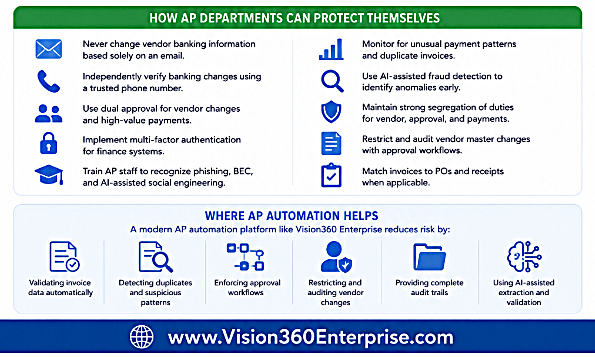


How AP Departments Can Protect Themselves from AI Fraud


Where AP Automation Helps


A modern AP automation platform like Vision360 Enterprise can reduce the risk of AI-enabled fraud by:

  • Automatically validating invoice data against vendor master records.
  • Detecting duplicate invoices and suspicious invoice patterns.
  • Enforcing approval workflows so invoices cannot bypass required approvals.
  • Restricting and auditing vendor master changes.
  • Matching invoices against purchase orders and receipts where applicable.
  • Providing complete audit trails for every action taken.
  • Using AI-assisted data extraction and validation to improve accuracy while still keeping humans involved in payment decisions.


The key point is that while AI has made fraud attempts more sophisticated, it can also be used defensively. Organizations that combine AI-assisted validation, strong internal controls, and well-designed AP automation are significantly better positioned to detect and stop fraudulent transactions before funds are sent.

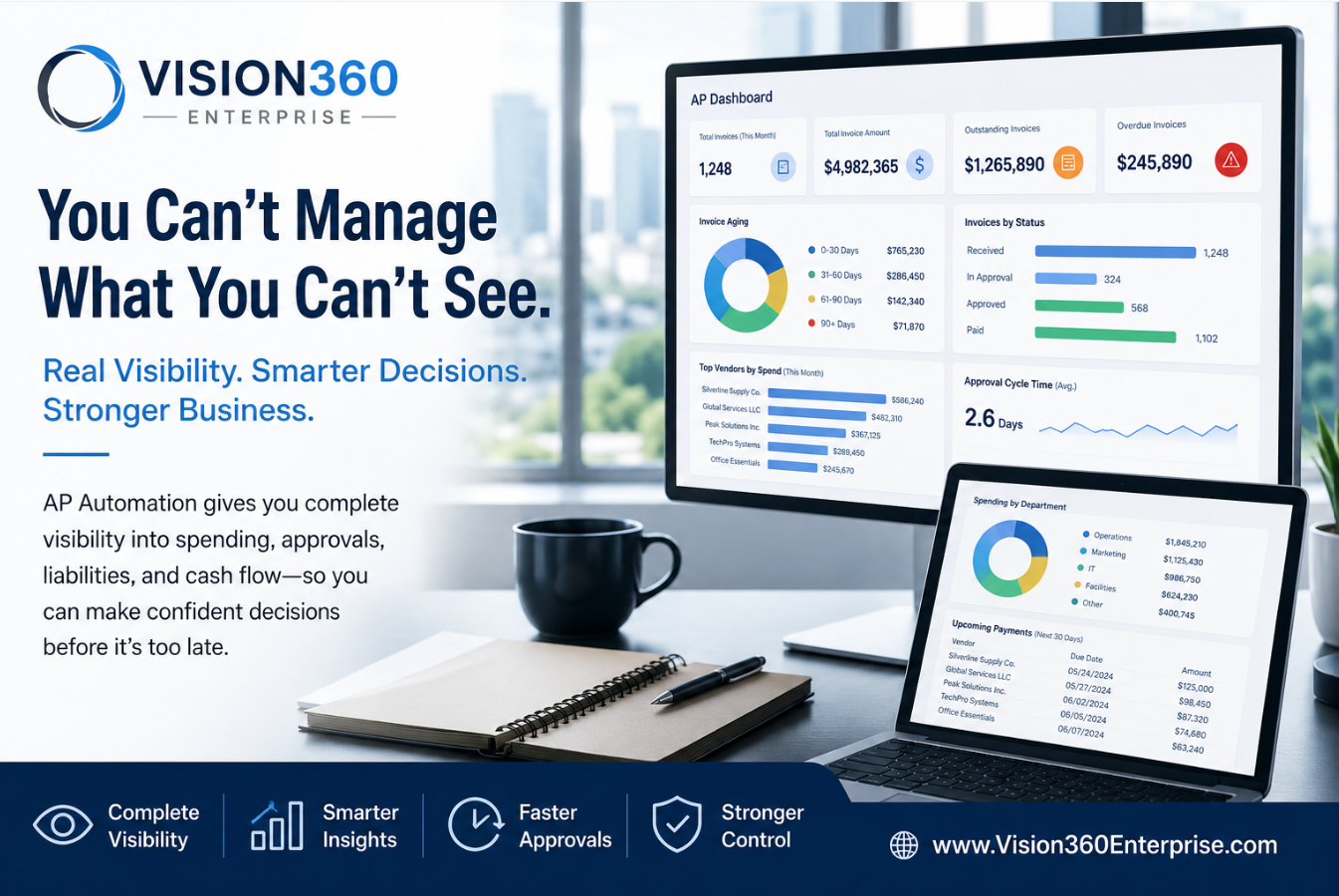
Vision360 AP Automatiobusiness analytics dashboard
By Richard Pigott June 22, 2026
Why Most Companies Don't Really Know What They're Spending Until It's Too Late 
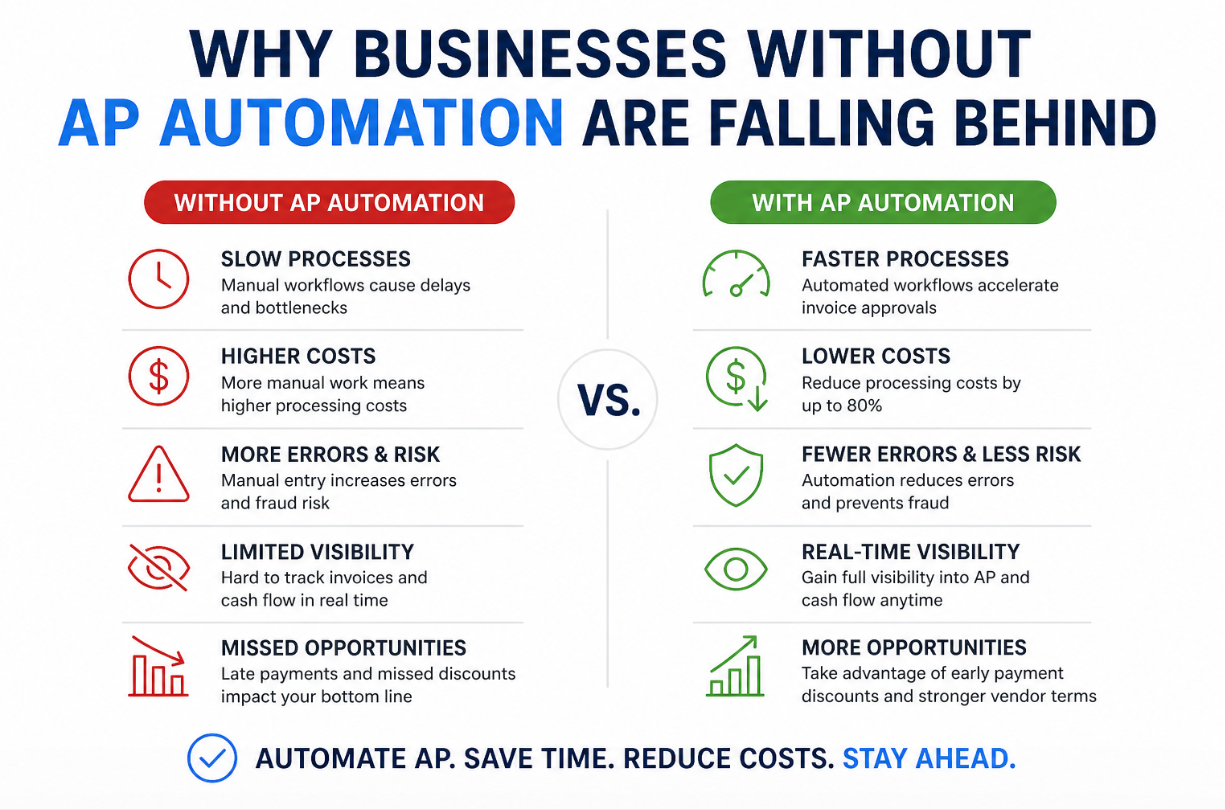
 AI automation vs with AI automation, showing costs, speed, errors, and efficiency.
By Richard Pigott May 4, 2026
Businesses without AP automation face rising costs & slow workflows. Streamline your processes with Vision360. Contact us today!
Stop letting vendors control your accounts payable process
By Richard Pigott May 4, 2026
Automate your AP process to cut costs by up to 80% & improve efficiency. Schedule a demo with Vision360 Enterprise today!
Is it time to eplace your legacy AP Automation system
By Richard Pigott April 24, 2026
Legacy AP automation platforms—particularly those implemented five, ten, or even fifteen years ago—were built for a different era.
By Richard Pigott April 24, 2026
With automation, organizations can improve invoice cycle times, reduce processing costs, strengthen compliance, and optimize payment timing.
Is Accounts Payable Always putting Out Fires
By Richard Pigott April 15, 2026
Learn how Vision360 AP Automation reduces errors & boosts efficiency. Transform your AP processes today!
The hanging role of accounts payable vision360 enterprise AI AP Automation
By Richard Pigott March 19, 2026
For decades, Accounts Payable (AP) has been viewed primarily as a transactional function — a necessary operational cost responsible for processing invoices, issuing payments, and maintaining financial records. Success was measured by accuracy, compliance, and efficiency in handling high volumes of repetitive work. Today, that definition is rapidly becoming outdated. Artificial Intelligence (AI) automation is transforming Accounts Payable from a back-office processing center into a strategic financial intelligence function. Over the next five years, AP will undergo one of the most significant evolutions in the history of finance operations — reshaping roles, workflows, required skills, and organizational value. The future of AP is not simply faster invoice processing. It is autonomous finance operations guided by AI, data visibility, and predictive decision-making. The Traditional Role of Accounts Payable Historically, AP teams focused on five core responsibilities: Invoice receipt and data entry Three-way matching (PO, invoice, receipt) Approval routing Payment execution Recordkeeping and audit support These processes were heavily manual. Paper invoices, email approvals, spreadsheet tracking, and ERP data entry defined daily work. In many organizations, AP staff spent nearly one-third of their time on manual data entry alone. This structure created familiar challenges: Long processing cycles High error rates Limited visibility into liabilities Supplier disputes Late payments and missed discounts AP was essential — but rarely strategic. AI automation changes this equation fundamentally. The First Wave: Automation Eliminates Manual Work The current transformation began with Robotic Process Automation (RPA) and OCR scanning. But modern AI goes far beyond rule-based automation. Today’s AI-powered Accounts Payable systems can: Read invoices in natural formats using intelligent document processing Extract and validate data automatically Match invoices against purchase orders autonomously Detect duplicates and anomalies Route approvals dynamically AI now understands document context rather than simply recognizing text fields. The measurable impact is substantial: Manual invoice touchpoints reduced by 70–85% Invoice processing times reduced from 10–14 days to 2–3 days Cost per invoice reduced by 60–80% after automation adoption Error rates significantly lowered through automated validation These gains represent more than efficiency improvements — they fundamentally change what AP professionals spend their time doing. Instead of entering data, teams increasingly manage exceptions, insights, and relationships. The Shift from Processing to Intelligence As automation removes repetitive work, the purpose of Accounts Payable expands. AI systems now provide real-time visibility into spending, liabilities, and payment status. Finance leaders can instantly see pending approvals, cash obligations, and supplier performance rather than waiting for month-end reconciliation. This visibility moves AP into a new role: AP becomes a source of financial intelligence. Organizations are already seeing AP professionals transition toward: Cash flow analysis Supplier relationship management Risk monitoring Compliance oversight Spend analytics Automation frees employees from administrative tasks, allowing them to focus on higher-value activities like financial analysis and vendor collaboration. In other words, AP shifts from doing transactions to understanding transactions. The Rise of Touchless and Autonomous AP The next phase — already emerging — is touchless Accounts Payable. Touchless AP refers to invoice workflows requiring little or no human intervention. AI captures invoices, validates them, routes approvals, and schedules payments automatically within predefined controls. But the real disruption comes from agentic AI — systems capable of reasoning and acting across workflows. Research into AI-driven business process automation shows intelligent agents can: Interpret business intent coordinate multi-step workflows learn from human decisions improve exception handling over time These systems move automation from task execution to decision support — and eventually toward operational autonomy. Within five years, many organizations will operate hybrid AP environments where: 80–90% of invoices process autonomously Humans intervene only for complex exceptions AI continuously optimizes workflows using historical data AP professionals will increasingly supervise systems rather than operate them. Embedded Payments and the End of System Switching Another major change reshaping AP is payment integration. Traditionally, AP teams moved between ERP systems, banking portals, spreadsheets, and approval tools. AI-driven platforms now embed payments directly into AP workflows, creating a single environment for invoice approval and payment execution. This consolidation enables: Real-time payment visibility Automated payment scheduling Stronger audit trails Improved cash forecasting The result is faster payments and stronger supplier relationships — with studies showing quicker approvals significantly improve vendor trust. Over the next five years, payment execution will increasingly become automated policy enforcement rather than manual action. AI as a Risk and Compliance Partner As digital transactions increase, fraud risks grow alongside them. AI is becoming essential in protecting finance operations. Modern AP automation platforms already detect: Duplicate invoices Suspicious vendor changes Unusual invoice values Fraud patterns across transactions AI continuously analyzes behavior patterns, flagging anomalies in real time — something humans cannot realistically scale. This transforms AP into a frontline control function supporting governance and compliance rather than merely recording transactions. The Changing Skill Set of AP Professionals Perhaps the most profound transformation is human, not technological. Over the next five years, the AP professional’s skill profile will shift dramatically. Skills decreasing in importance Manual data entry Paper handling Transaction processing Basic reconciliation Skills increasing in importance Data interpretation Process optimization Vendor collaboration Financial analysis AI oversight and governance Industry observers increasingly describe employees becoming “AI managers,” supervising automated agents and validating outcomes rather than executing tasks themselves. This aligns with broader workforce trends: analysts expect millions of roles annually to be redesigned as AI reshapes job structures across industries. AP jobs are not disappearing — they are evolving. Where Accounts Payable Will Be in Five Years By 2031, Accounts Payable will likely look radically different from today. 1. Autonomous Processing as the Default Most invoices will process without human intervention. Exception handling becomes the primary human responsibility. 2. Continuous Financial Visibility AP data feeds real-time dashboards used for forecasting, liquidity planning, and operational decisions. 3. AP as a Strategic Finance Function AP contributes insights into spending trends, supplier risk, and working capital optimization. 4. AI Agents Managing Workflows AI systems orchestrate approvals, payments, and compliance checks end-to-end. 5. Human-in-the-Loop Governance Humans remain essential for judgment, ethics, supplier relationships, and strategic decisions. The Strategic Opportunity for Organizations Organizations that view AP automation solely as cost reduction will miss the larger opportunity. AI-powered AP enables: Better cash management Stronger supplier ecosystems Faster financial close cycles Improved compliance posture Data-driven decision-making CFOs increasingly recognize AI as a major productivity driver and are expanding technology investments accordingly. In this environment, Accounts Payable becomes a competitive advantage rather than an operational burden. Conclusion: From Back Office to Intelligence Hub Accounts Payable is undergoing a transformation comparable to the shift from paper ledgers to ERP systems decades ago. AI automation is redefining AP in three stages: Automation — eliminating manual work Intelligence — delivering real-time insights Autonomy — enabling self-optimizing financial workflows Five years from now, the most successful AP departments will not be measured by how many invoices they process but by how effectively they help organizations manage cash, risk, and supplier ecosystems. The future AP professional will not be an invoice processor. They will be a financial operations strategist — supported by AI systems that handle the mechanics while humans provide judgment, context, and leadership. Accounts Payable is no longer just paying bills. It is becoming one of the most data-rich, strategically valuable functions in modern finance. The Only Accounts Payable Automation System, Built by AP Professionals for AP Professionals. Since 2007, BlueCreek Software's Vision360 Enterprise accounts payable automation system has saved companies an endless amount of time, energy and money. Vision360 Enterprise AI Automation eliminates the tedious, non-productive tasks associated with processing supplier invoices. Contact us to learn more or schedule a demonstration.
The Quiet Signs Your AP Process Is Not As Efficient As You Think
By Richard Pigott March 17, 2026
Here are some of the quieter signs your AP operation may be costing more than it appears on the surface.
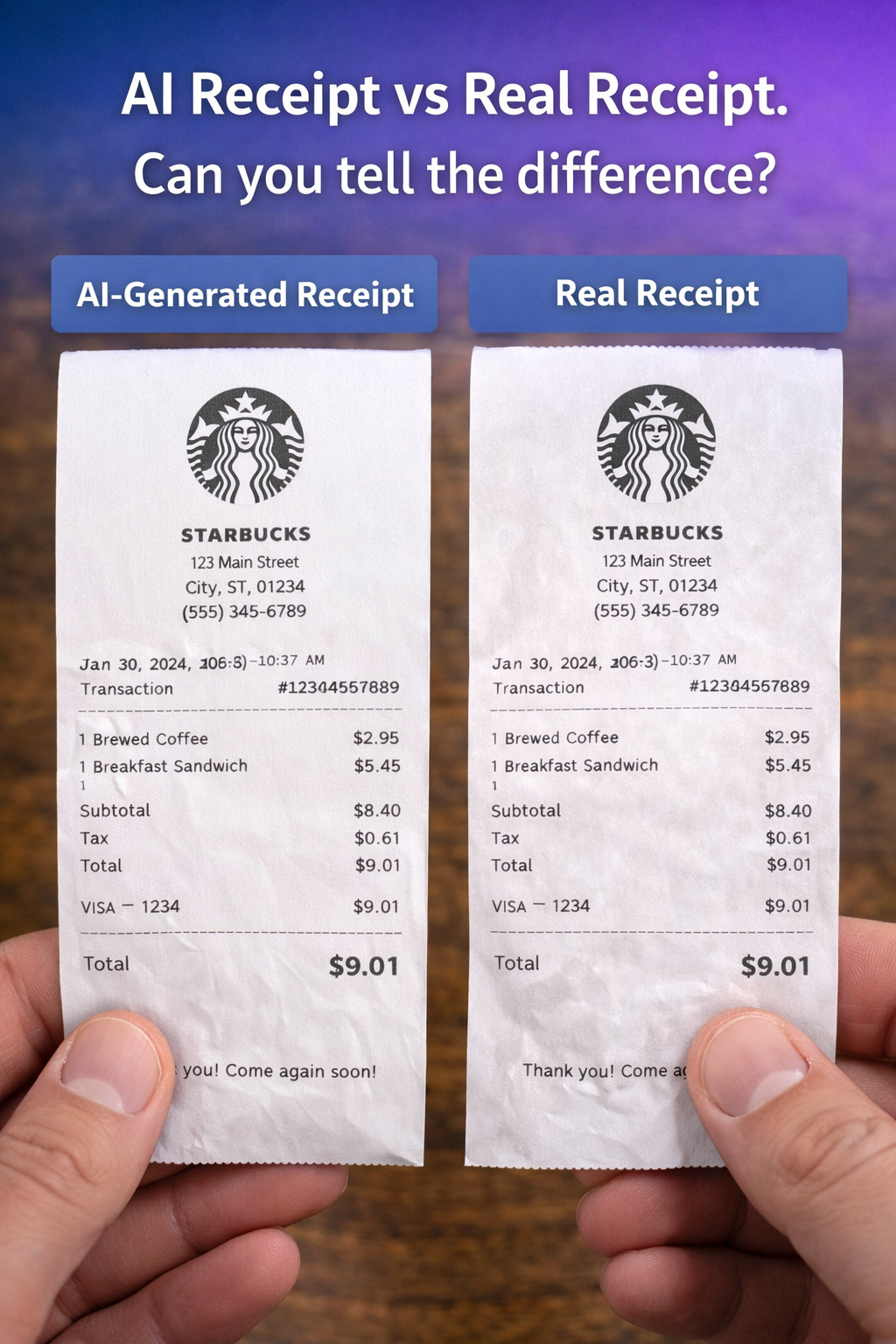
AI Receipts in Accounts Payable
By Richard Pigott February 9, 2026
AP automation doesn’t try to spot the fake by eyeballing a receipt. It prevents AI-generated receipts from being approved by verifying reality, not appearance.
How AI s Changing AP Automation
By Richard Pigott January 30, 2026
AI Accounts Payable automation that replaces manual invoice processing with intelligent data capture, adaptive workflows, and real‑time visibility